


Every relationship you’ll ever experience evolves. At first, they feel exciting and dreamy, then you’ll transition into something deeper, more complex. It is challenging. Most couples will go through a series of stages. These stages consist of the honeymoon stage, the uncertainty stage, the adjustment stage, the commitment stage, and finally the acceptance stage.
Luckily for you, understanding these stages of your relationship is the first step in getting through them.
Tyler Raybold, a boyfriend of 3 years to Kalli Pedersen, was the perfect pupil to give insight on the topic. Immediately expressing that he could talk about her for hours, Raybold broke down each stage and how he was able to navigate through them.
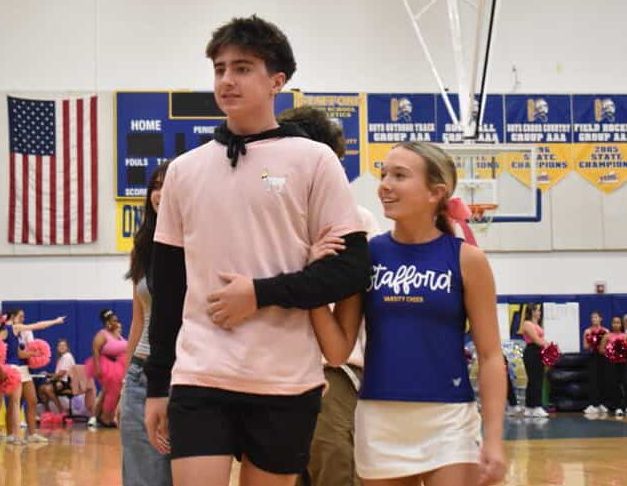
When asked to reflect on his honeymoon phase, Raybold explained that while their relationship still experienced the honeymoon phase, it looked different than what would be expected. “I do think we had one,” he said. “But I think our relationship is also different because we trusted each other from the beginning.” For them, it felt natural and was based on a mutual understanding and trust for each other.
After the honeymoon phase fizzles out, many couples are left with the uncertainty stage. This is a period where differences can become more prominent; conflict begins to rise. For Raybold and Pedersen, this time in their relationship wasn’t filled with dramatic fights or heated conflicts, instead it was learning how to navigate small disagreements. “I mean we had just argued about small stuff, stupid things I don’t even remember because they were so small,” Raybold said. “But then we thought on it and then talked about it with each other and then we grew from there and just got better for each other.” The pair actively chooses communication over lingering frustrations towards each other.
Raybold then went on to emphasize the importance of independence and individuality through this stage. He explained that isolating yourself from friends and treating dating like marriage was the first step in the wrong direction. He adds, “You should have your own peers that are separate than each other’s…I think that really helps you shape yourself as a person.”
Naturally, the next stage is adjusting to each other. This is the prime opportunity for any relationship to build a steady foundation to grow on. When it comes to Raybold’s relationship, this stage was focused on healing from season shattering injuries as a team. Both Raybold and Pedersen both suffered injuries during the same time — coincidentally attending the same physical therapy office. The experience brought the two even closer, “Talking things out with each other is the best way to do it,”Raybold remarked. “Rather than keeping those emotions built up and it eventually comes out in a negative way.”
Pedersen and Raybold made what could have very easily been a distancing hardship into shared support and encouragement, drastically strengthening their partnership.
Commitment, the fourth stage, is where a relationship becomes intentional. For this duo, commitment means even the littlest things make the biggest difference. What Raybold describes as “just the little stuff,” being present, finding time for each other, simply talking to each other. It’s less about the extravagant gestures, but consistently showing up for one another.
Finally, comes acceptance. This is where couples can truly and fully acknowledge each other, flaws and all, and choose to stay regardless. Raybold leaves us with the most important lesson he’s learned in his three-year relationship, “If you’re together you can do anything. If you have someone there for you, whether it’s addiction, injuries, hardships, whatever it is. You can get through anything together.”

